
Today, being fast and creative is very important. Technology is changing how we organize and use digital files like photos, videos, and documents. This is called Digital Asset Management (DAM).
That’s where advanced DAM systems come in. These platforms streamline operations, making it easier for teams to find and use the right files. With technologies like machine learning, DAM has evolved further to offer smarter, faster solutions that save time and boost productivity.
Here are how DAM systems powered by AI and ML tools are transforming businesses today.
- They can label pictures and videos automatically.
- They can recognize what’s in a photo or video.
- They can predict what files you might need next.
- They even help make new content faster.
As firms scale, managing an ever-growing pool of content becomes complex. How do you keep up? AI-driven digital asset management systems can transform the landscape, adding intelligence to traditional asset management processes.
The Role of AI in DAM
AI has changed the way businesses handle their digital assets. It has turned traditional DAM systems into intelligent, efficient platforms. It does an excellent job of automating repetitive tasks like tagging and categorization allows companies to focus on creativity and strategy.
These systems don’t just organize files-they make them easier to find and use, ensuring seamless workflows and faster decision-making.
How AI is Transforming Digital Asset Management
Incorporating AI in digital asset management allows businesses to manage modern business challenges. Artificial intelligence and machine learning in DAM systems improve workflow efficiency by:
Metadata Tagging
One of the most time-consuming tasks in managing digital assets is assigning metadata, the descriptive information that helps categorize and find files. Smart DAM platforms now handle this process automatically.
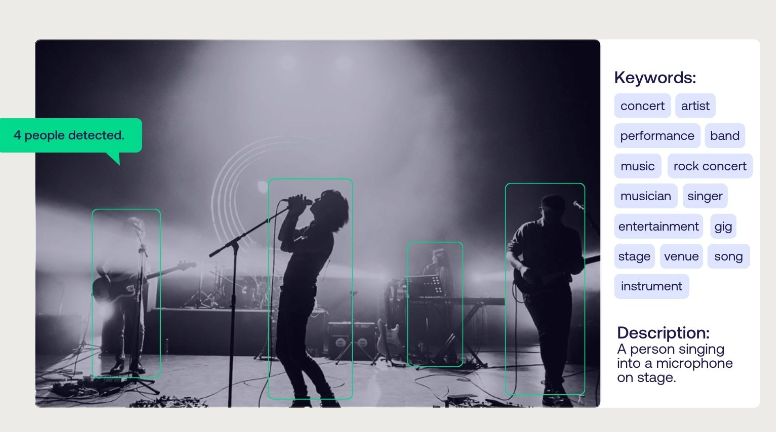
Image Source: Fotoware
- These tools analyze the content of a file and tag it with accurate descriptions, such as “concert,” “music,” or “instrument.”
- Users can save time and ensure consistency across all files so their teams find the necessary assets without any trouble.
Image Recognition
Finding specific images in a large collection can be like searching for a needle in a haystack. Smart DAM tools use advanced recognition technology to identify objects, faces, or scenes within images.

Image Source: pics.io
- For example, they can detect a group of people in a photo, label the setting as an “office meeting,” or identify a person wearing a specific outfit. Eg, Google Photos, create an individual album by recognizing a face in the images.
- This level of detail allows businesses to organize visual content more effectively and makes it simple to locate specific images for campaigns or projects.
Image recognition also enhances user experience by enabling searches that go beyond filenames or generic tags, leading to more accurate results.
Video Analysis
Video files, often more complex and data-heavy, benefit greatly from smart technology. Tools can analyze video content frame by frame to identify important segments, characters, or events.

Image source: nsoftvision
- For example, a production team might need a specific scene from a long commercial. Smart DAM systems can tag individual moments, such as “product reveal” or “close-up of smiling actor,” making retrieval effortless.
- These systems can also provide summaries or transcripts of spoken content, saving time for teams that need quick access to video highlights.
This technology is particularly valuable for media companies, enabling them to streamline workflows and improve content delivery.
Content Recommendations
Smart DAM systems do more than just organize files-they can suggest which assets to use based on specific needs.
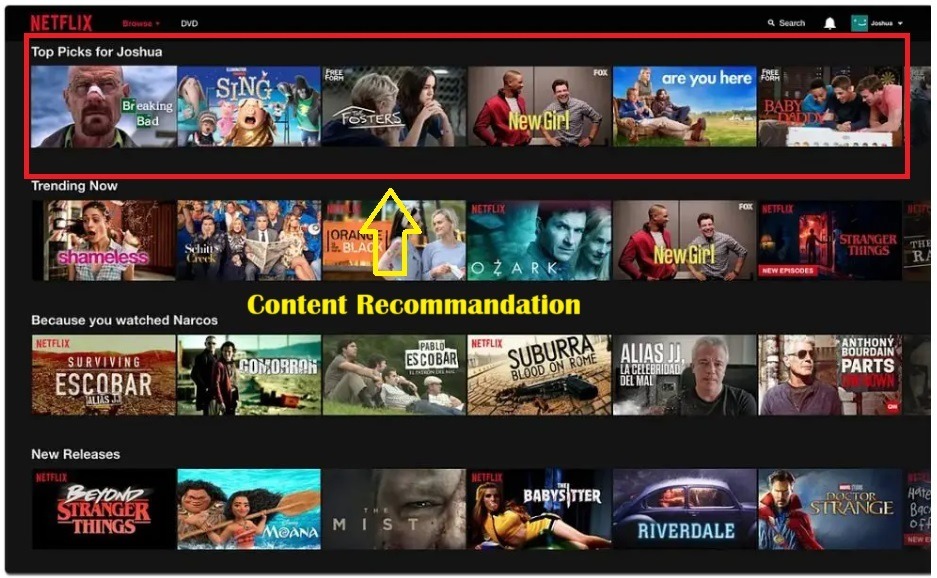
- By analyzing user behavior, past campaigns, or project goals, these tools recommend the most relevant files for the task at hand.
- For example, if a marketing team frequently uses certain images for social media posts, the system can prioritize those assets for similar future projects.
This predictive ability ensures that the right assets are always at hand, speeding up decision-making and improving campaign effectiveness.
Version Control and Governance
Managing multiple versions of a file can be challenging, especially when teams work collaboratively. Smart DAM tools simplify this by tracking changes and maintaining a clear record of file updates.
- This ensures that only authorized users can edit or access sensitive files, preventing mistakes or unauthorized modifications.
- For instance, a content manager working on a project update can see the entire history of changes.
AI-Driven Features in Modern DAM Solutions
The integration of AI and other advanced technologies into DAM platforms is driving several key trends. Here are the solutions that are driving modern DAM solutions:
- Automation in Content Workflows
AI reduces manual intervention by automating asset tagging, classification, and approval processes. - Voice and Natural Language Search
AI-powered DAM systems enable users to find assets using conversational queries, simplifying retrieval for non-technical users. - Integration with Martech Ecosystems
Modern DAM systems integrate seamlessly with marketing automation tools, CRMs, and creative software, enabling cohesive workflows. - Personalized Asset Delivery
AI analyzes audience data to suggest and deliver assets tailored to specific demographics, improving campaign outcomes. - Blockchain for Asset Security
Blockchain for digital assets ensures secure ownership and prevents unauthorized asset use.
Use Cases of AI-based DAM Solution
AI-based media management tools make it easier for industries to organize and use digital files, like pictures, videos, and documents. Here’s how these tools help in everyday jobs:
Retail
Stores and online shops use AI systems to organize big collections of products.
- For example, these tools can sort clothes by style, color, or season.
- This helps stores show shoppers items they might like, such as a warm coat in winter or a blue dress for summer.
Media and Entertainment
Movie and music companies use AI-based tools to find and sort content faster.
- For example, the system can recognize specific scenes or characters in a movie.
- This helps them advertise better, like promoting toys of a movie character.
Healthcare
Doctors and hospitals use these tools to organize and study medical pictures and patient files.
- For instance, the system can look at X-rays or scans and find signs of disease early.
- This helps doctors give faster and better treatment.
Manufacturing
Factories use AI tools to handle important documents about their products.
- For example, they can sort and label product blueprints, making it quicker to set up machines for production.
- This helps companies save time and make things faster.
Marketing
Marketers use these systems to check how well their ads and pictures work.
- For instance, they can find out which pictures people like more and suggest better ones for the next ad.
- This makes campaigns more exciting and keeps the brand looking the same everywhere.
Top AI-Based Digital Asset Management Platforms
Several DAM platforms stand out for their robust AI integration and user-friendly interfaces. Here are the top Digital asset management tools with AI integrated:
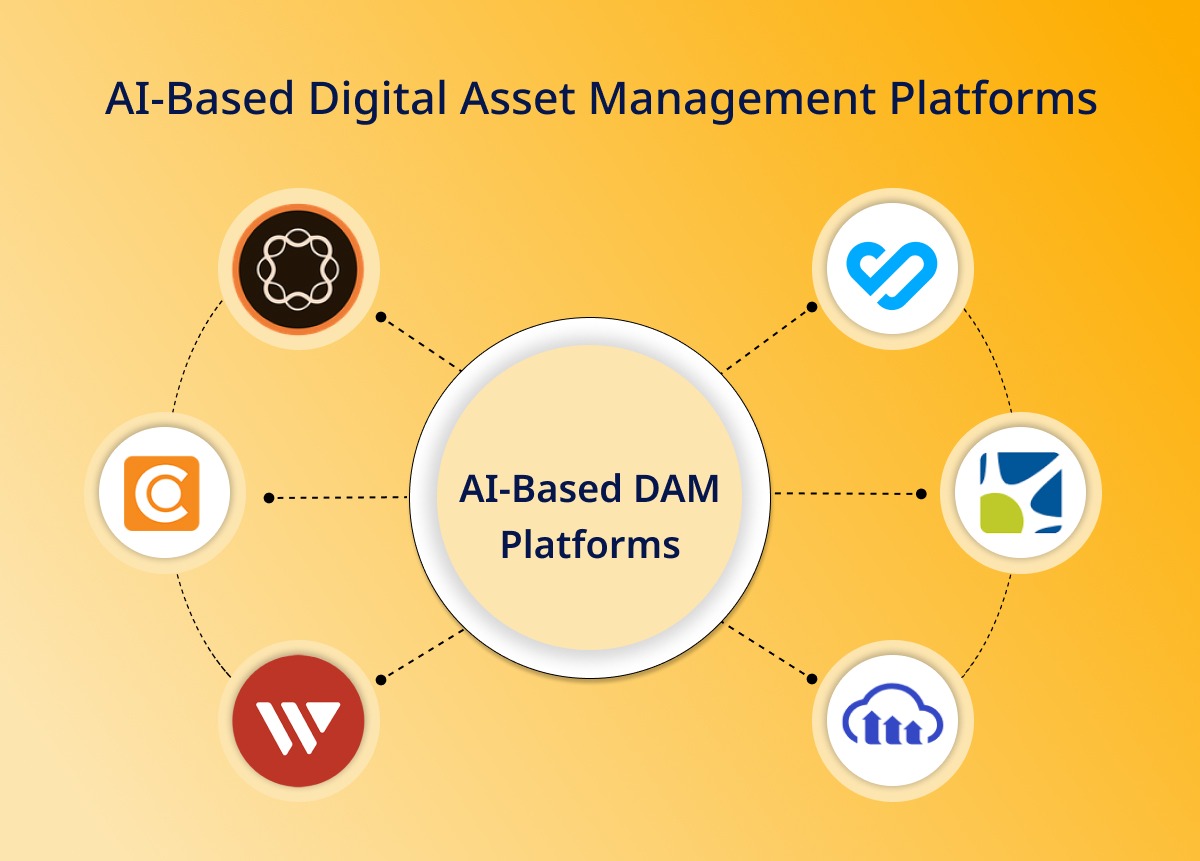
- Bynder
A highly intuitive DAM platform offering automated workflows, AI-powered tagging, and seamless integration with creative tools like Adobe Creative Suite. - Widen Collective
Known for its rich analytics capabilities and AI-powered categorization, Widen provides insights into asset performance and usage. - Adobe Experience Manager (AEM)
Part of Adobe’s ecosystem, AEM combines DAM capabilities with AI features like content automation and intelligent recommendations. - Canto
Canto focuses on visual content management with a user-friendly interface and AI-based image recognition. - MediaBeacon
This enterprise-grade DAM platform offers AI-powered search, workflow automation, and integration with various Martech tools. - Cloudinary
Popular among developers and marketers, Cloudinary supports advanced AI for image and video optimization and management.
Benefits of AI-Based DAM
An artificial Intelligence services company helps you integrate AI into digital asset management systems, allowing you an effortless experience and better navigation:
- Improved Efficiency
AI eliminates time-consuming manual tasks like tagging, categorization, and file organization, allowing teams to focus on creative tasks. - Enhanced Searchability
Advanced AI features like facial recognition, voice analysis, and natural language processing make finding the right asset faster and easier. - Scalability
AI ensures DAM systems scale effortlessly as the volume of digital assets grows, accommodating complex content repositories. - Optimized Asset Utilization
With AI’s predictive capabilities, teams can identify high-performing assets and repurpose them effectively across campaigns. - Better Compliance and Governance
AI ensures assets adhere to brand guidelines, copyright regulations, and usage policies, minimizing risks. - Cost Savings
Automation reduces the need for manual oversight, lowering operational costs while increasing productivity.
The Future of Automation in DAM Systems
Smart tools are changing the way we organize and use digital files. These tools help businesses manage, find, and use their photos, videos, and documents in smarter and easier ways.
Automation in DAM systems allows businesses to work faster, stay organized, and make better choices based on what the data shows.
It’s important for businesses to use tools that fit their needs and match the latest trends. By using these smart systems, businesses can handle their digital files more efficiently and stay ahead of the competition.
The future of managing digital files is full of possibilities. These tools make work easier, boost creativity, and help businesses succeed. The journey has just started, and companies that use these systems now will be ready to grow and thrive in the digital world.
Conclusion
AI in digital asset management systems is no longer an advanced solution-it is a necessity for modern businesses navigating the complexities of content management. By leveraging blockchain for digital assets and machine learning services, organizations can streamline their workflows, improve content discoverability, and maximize the value of their digital assets.
Whether you’re looking for advanced search capabilities or seamless integration with your marketing tools, the right digital asset management services help you transform how you manage your content. As trends like automation, personalization, and blockchain continue to shape the future of DAM, businesses must adopt these innovations to stay competitive.
The post The Role of AI in Modern Digital Asset Management Systems appeared first on Datafloq.
