
Digital commerce is no longer about selling online. It is about adaptability, ownership, innovation, and meeting the unique needs of customers across specialized markets. While many platforms like Shopify, WooCommerce, and BigCommerce dominate mainstream ecommerce, niche industries often require something more flexible, customizable, and future ready.
Enter Shopware. Backed by rapid global adoption, a strong open source foundation, powerful B2B features, and a composable-ready architecture, Shopware has become the rising star for ecommerce brands that need control, creativity, and scalability without being locked into rigid ecosystems.
As businesses in manufacturing, specialty retail, lifestyle niches, luxury goods, technical equipment, and subscription-based commerce seek tailor made digital infrastructures, Shopware ecommerce solutions stand out as one of the strongest contenders.
This comprehensive guide explores why Shopware is gaining momentum in 2026, what makes it ideal for niche industries, and how brands can leverage it to build high performing storefronts that delight customers and scale profitably.
The State of eCommerce in 2026: A New Reality for Niche Industries
Niche industries face a different set of challenges compared to mainstream ecommerce categories. Their buyers are more informed, their products are more specialized, and their workflows are more demanding.
In 2026, three major shifts are pushing niche businesses to reconsider their ecommerce platforms.
Shift 1: Experiences Matter More Than Products
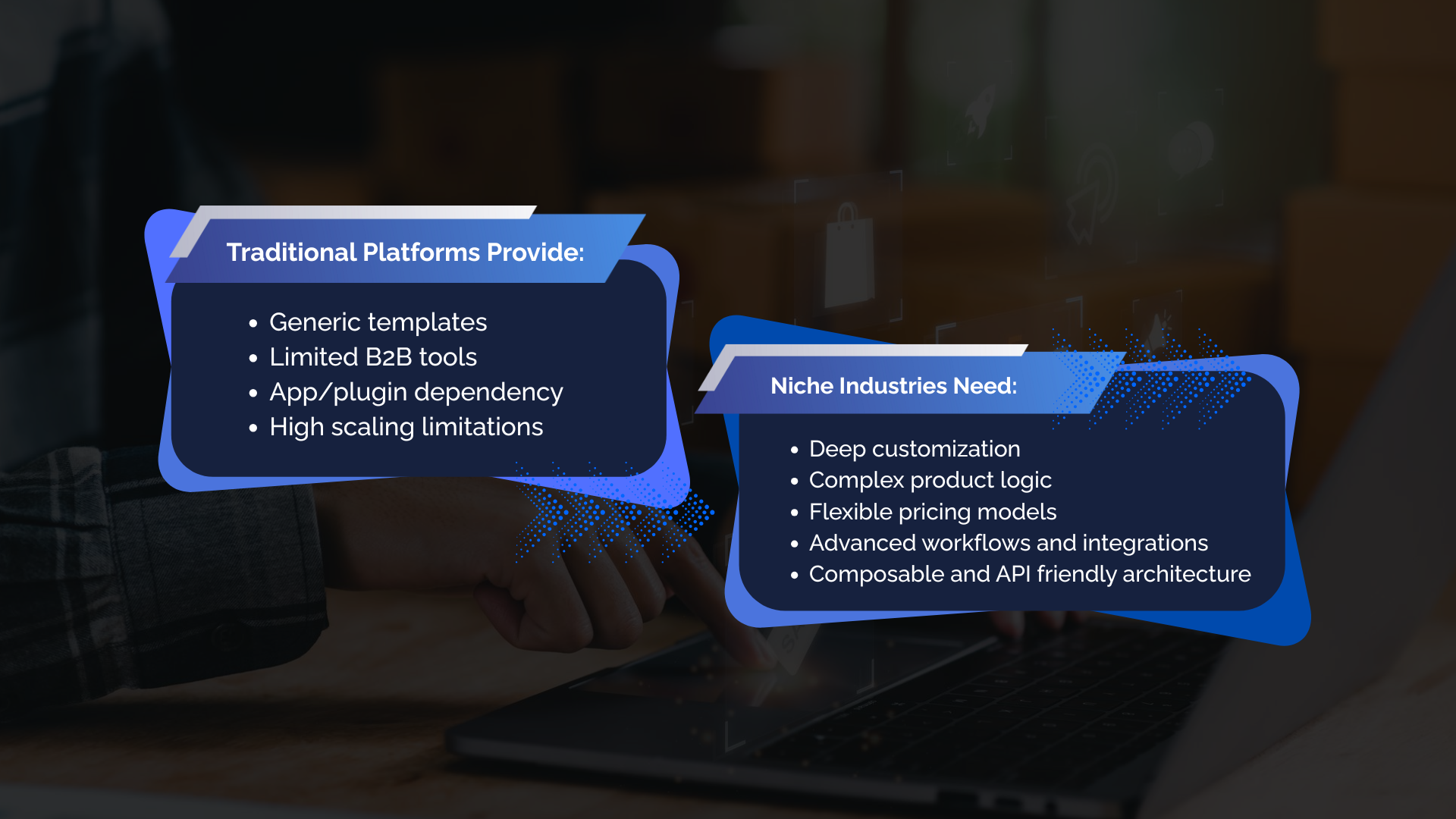
The era of generic online stores is over. Modern buyers want:
- Product discovery that feels personalized
- Rich content experiences
- Clear comparisons and configurators
- Seamless B2B purchasing workflows
- Fast communication and transparency
Platforms that rely on cookie cutter templates often fail niche buyers who expect detail, depth, and clarity.
Shopware excels because it was designed to build experience driven commerce.
Shift 2: Composable and Headless Commerce Is Becoming the Standard
Instead of buying a monolithic system that forces businesses to accept limitations, brands want:
- Independent frontend flexibility
- API friendly ecosystems
- Control over integrations
- Custom pricing engines
- Advanced workflows
Shopware’s API first, headless optional architecture gives niche merchants more freedom compared to competing platforms.
Shift 3: Costs and Control Matter More Than Ever
Platforms with unpredictable fees or add-on expenses do not suit niche industries that require stability and full ownership.
Shopware’s transparent pricing, modular architecture, and open developer ecosystem offer long term cost efficiency while maintaining feature depth.
Why Shopware Stands Out: 10 Core Advantages for Niche Industries
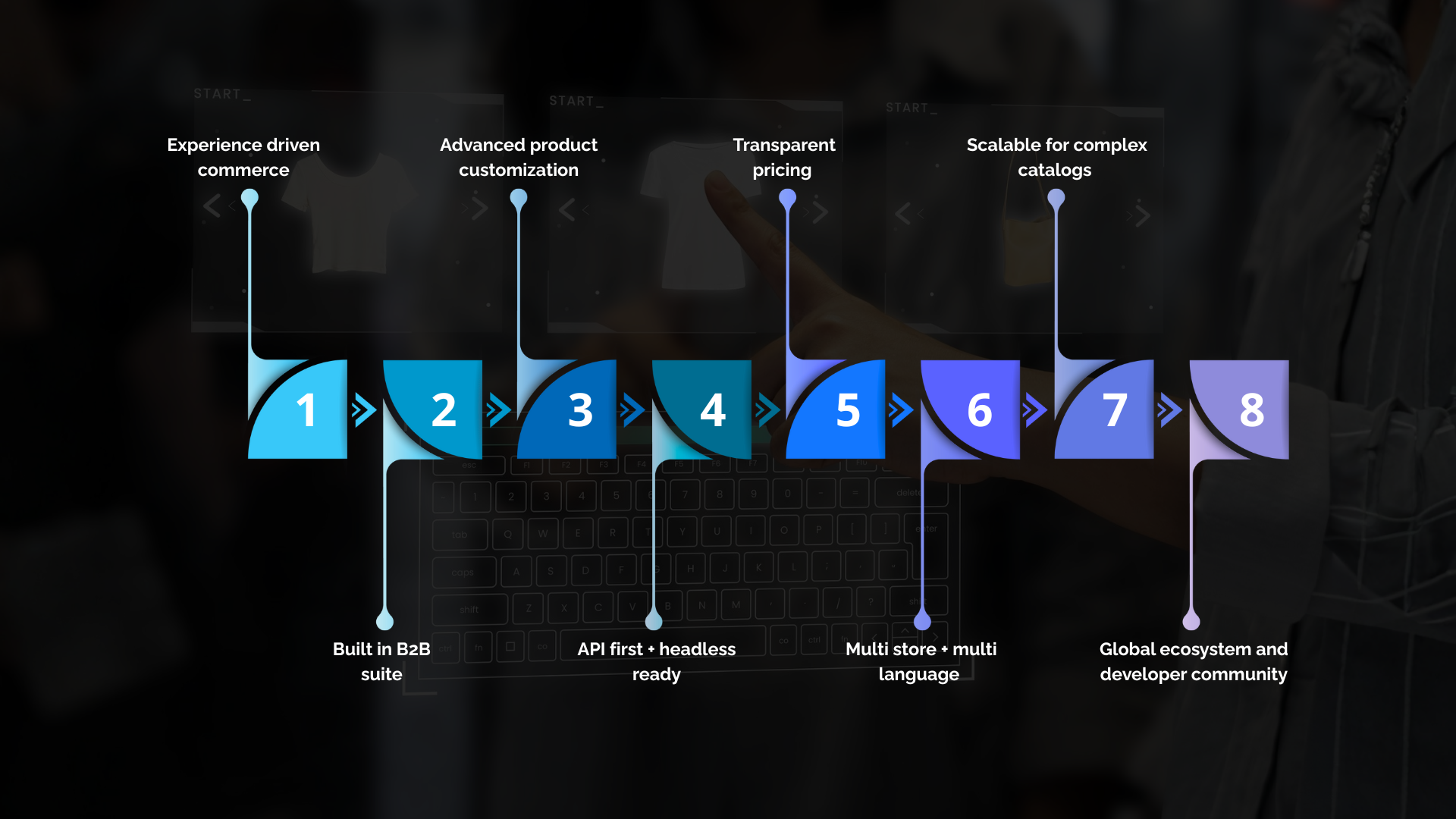
1. Shopware Is Built for Experience Driven Commerce
Shopware pioneered what it calls Experience Management, a visual-building environment that allows brands to design content rich shopping experiences without code.
Niche businesses that rely on storytelling or detailed product education benefit from:
- Drag-and-drop CMS
- Landing page builders
- Dynamic product blocks
- Mobile-first content layouts
- Category storytelling sections
Shopware is often compared to Shopify in usability, but it provides far more flexibility for content customization.
2. Shopware Has Built-In B2B Capabilities That Competitors Lack
Unlike other platforms, which often require heavy custom development, Shopware includes B2B features out of the box.
These include:
- Corporate user accounts
- Approval workflows
- Budget controls
- Custom price lists
- Quick order with SKU entry
- Quotation request flows
- Complex shipping logic
- Negotiated deal management
For niche sectors like industrial supply, healthcare distribution, wholesale manufacturing, packaging, and specialized equipment, these features save significant time and development cost.
3. Shopware Supports Highly Custom Product Types
Niche industries often need complex product logic such as:
- Configurable components
- Custom dimensions
- Build to order items
- Multi attribute variations
- Consumables and refill logic
- Warranties and recurring services
Shopware’s modular product structure and API flexibility allow developers to model even the most intricate product systems.
4. Shopware Is API First and Ideal for Composable and Headless Builds
Shopware 6 is built on modern architecture:
- Symfony framework
- API first design
- Headless ready
- Composable commerce friendly
- Easy frontend replacement
- Compatible with Vue, React, Next.js, and Nuxt
This makes it suitable for brands building specialized storefronts or unconventional digital experiences.
5. Shopware Has a Mature and Growing Global Ecosystem
Reports like Top Shopware Agencies to Watch in 2025 highlight an explosive growth of certified partners.
Why this matters:
- More developers
- Better support
- Lower development costs
- Faster innovation cycles
- Stronger global adoption
A platform’s long term value depends heavily on its ecosystem and community. Shopware’s community has grown rapidly throughout 2024 and 2025.
6. Shopware Has Transparent Pricing and Total Cost of Ownership Control
Unlike closed platforms with app fees, Shopware gives merchants ownership through:
- Open source core
- Clear licensing
- Flexible hosting
- Avoidance of per transaction fees
- Lower cost scaling for high volume businesses
Niche industries often operate on unpredictable margins. Shopware gives them cost stability without sacrificing innovation.
7. Shopware Excels in Multi Store and Multi Language Commerce
Shopware supports:
- Multiple storefronts
- Multiple regions
- Multiple currencies
- Language flexibility
- Localized content
Perfect for businesses selling:
- Region specific collections
- Seasonal specialty items
- Different product lines in different markets
This makes it ideal for niche brands entering global or multicultural markets.
8. Shopware Is Known for Flexibility and Customization
Niche brands need custom workflows like:
- Special checkout requirements
- Industry specific compliance
- Custom shipping rules
- ERP integration
- B2B account hierarchies
Shopware’s architecture enables developers to modify or extend nearly any part of the system.
9. Shopware Performs Well Under Complex and Heavy Catalogs
For industries with:
- Thousands of SKUs
- Technical product specs
- Long tail variations
- Heavy search requirements
Shopware remains stable and fast, especially when paired with cloud hosting or headless frontends.
10. Recognition in G2 Winter 2025 Reports Strengthens Credibility
According to G2’s 2025 Winter Reports, Shopware earned multiple Leader badges. This validates:
- Real user satisfaction
- Strong feature performance
- Global adoption momentum
Niche industries prefer platforms with trusted enterprise validation.
How Shopware Serves Different Niche Industries
Shopware’s strengths make it one of the most versatile ecommerce platforms for complex or specialized verticals.
Below are top industries benefiting from Shopware today.
Manufacturing and Distribution
Shopware supports:
- Bulk order processing
- B2B pricing
- Contract based pricing
- Multi warehouse inventory
- Custom product configurators
- Fast reorders
- ERP integrations like SAP, Microsoft BC, NetSuite
It is ideal for manufacturers selling to both distributors and direct customers.
Beauty, Wellness, and Subscription Niches
Shopware excels with:
- Subscription engines
- Story driven product layouts
- Ingredient storytelling
- Routine builder workflows
Perfect for:
- Clean beauty brands
- Ayurveda products
- Wellness niche bundles
Automotive, Tools, and Specialist Equipment
These industries need:
- Fitment logic
- Year make model search
- Technical spec pages
- Bulk B2B pricing
Shopware handles these with ease.
Lifestyle, Fashion, and Customizable Products
Shopware’s flexible storefront and visual builder benefit:
- Streetwear niches
- Sustainable fashion brands
- Handmade crafts
- Cultural and local lifestyle brands
Hobby, Collectibles, and Micro Communities
Shopware supports unique catalogs like:
- Limited edition drops
- Collector series
- NFT or digital assets
- Micro marketplace setups
This flexibility is hard to find in mainstream ecommerce platforms.
Key Features That Make Shopware Perfect for Niche Industries
This section dives deeper into the features that make Shopware ecommerce solutions stand out.
Advanced Rule Builder
This allows merchants to create conditional logic such as:
- Shipping rules
- Payment limitations
- Customer segment pricing
- Country restrictions
- Seasonal promos
No coding is required.
AI and Automation Features (2024-2025 Enhancements)
Shopware’s newer AI capabilities include:
- AI content generation
- Automated product descriptions
- Merchandising suggestions
- Predictive search
- Smart recommendations
Ideal for niche businesses with deep product catalog depth.
Improved Search and Filtering
Shopware’s built in search is strong. Paired with extensions like:
- Elasticsearch
- OpenSearch
- AI powered search
It becomes even more powerful for niche B2B catalogs with granular requirements.
Integrations and API Compatibility
Shopware integrates smoothly with:
- ERP
- CRM
- PIM systems (like Sales Layer, Akeneo, Plytix)
- Marketing tools
- Custom industry systems
This is crucial for niche industries relying on complex internal systems.
Shopware vs Other Platforms: Why It Wins for Niche Use Cases
This simplified comparison highlights Shopware’s strengths compared to other major players.
Shopware vs Shopify
| Feature | Shopify | Shopware |
|---|---|---|
| Customization | Limited without apps | Highly flexible |
| B2B features | Add-ons required | Built-in |
| API flexibility | Moderate | Advanced |
| Headless support | Possible | Native |
| Product complexity | Basic | Ideal for complex |
Shopware vs WooCommerce
| Feature | WooCommerce | Shopware |
|---|---|---|
| Stability | Plugin heavy | Modular |
| Scaling | Difficult | Efficient |
| Security | Depends on plugins | Core level security |
| B2B logic | Extensions needed | Native |
Shopware vs Magento (Adobe Commerce)
| Feature | Magento | Shopware |
|---|---|---|
| Complexity | Very high | Moderate |
| Dev cost | Expensive | Balanced |
| B2B | Strong but dev heavy | Built in |
| Time to market | Slow | Fast |
FAQs
1. What makes Shopware ideal for niche ecommerce industries?
Shopware provides unmatched flexibility, experience driven design features, B2B capabilities, and API first architecture that supports highly customized workflows for specialized industries.
2. Is Shopware suitable for B2B ecommerce?
Yes. Shopware includes native B2B features like corporate accounts, approval workflows, custom pricing, quotations, and quick order systems without requiring heavy custom development.
3. Can Shopware integrate with ERPs and PIMs?
Shopware integrates seamlessly with systems like SAP, Microsoft BC, NetSuite, Sales Layer, Akeneo, and other enterprise systems through its strong API capabilities.
4. Does Shopware support headless commerce?
Yes. Shopware 6 is built with a headless optional architecture that allows brands to use any frontend framework like Next.js, React, or Vue.
5. Is Shopware cost effective for scaling?
Shopware offers transparent pricing, no transaction fees, and flexible hosting, making it cost efficient for growing businesses with large catalogs or high order volumes.
The post Why Shopware Is the Rising Star for eCommerce in Niche Industries appeared first on Datafloq.
