
Venkata Raghavendra Swamy Gudipati / 5 min read
December 12, 2025
The cloud system required people to work extended late shifts throughout multiple years for its continued operational reliability.
The systems of engineers became nonoperational which triggered them to receive urgent emergency alerts. Dashboards were accessible.
Slack channels received broad public attention during this time. Users discovered the problem through two methods: they either found it by accident or they learned about its existence.
It is gradually becoming obsolete. The current cloud infrastructure operates at such a large scale with widespread distribution and high speed that human real-time monitoring has become impossible because of its complexity.
It is not replaced by a dramatic or ostentatious shift. It is silent. gradually. Quite courteous. Self-healing cloud systems have entered the market to revolutionize DevOps operations but they do not consider team preparedness.
Self-Healing Isn’t New-We Just Underestimated It
Self-healing behavior has already been used by the majority of engineers, even if they have never called it that.
Kubernetes includes an automatic restart system which starts pods automatically when they stop working. Managed databases perform background operations to fix blocks which have become damaged. Auto-scaling groups activate their response mechanisms before traffic reaches levels which would result in system damage.
No admission. No permission. Don’t meet. Scientists studied these elements as features instead of signals during multiple years. Scientists continue to apply the basic self-healing concept through new methods.
Modern systems require more than basic error correction because they need to handle all system issues. The students now understand how patterns and context and probability work together. That makes all the difference.
Why the Old DevOps Model Is Breaking
DevOps teams’ lack of expertise is not the issue. Human attention has exceeded the sustainable boundaries which the environment can support.
Modern enterprise cloud environments operate with multiple Kubernetes clusters which support hundreds of microservices and continuous CI/CD pipeline execution and telemetry data collection from all directions.
The different behavioral patterns which healthcare providers display during their work shift result in two major problems which are burnout and alert fatigue. 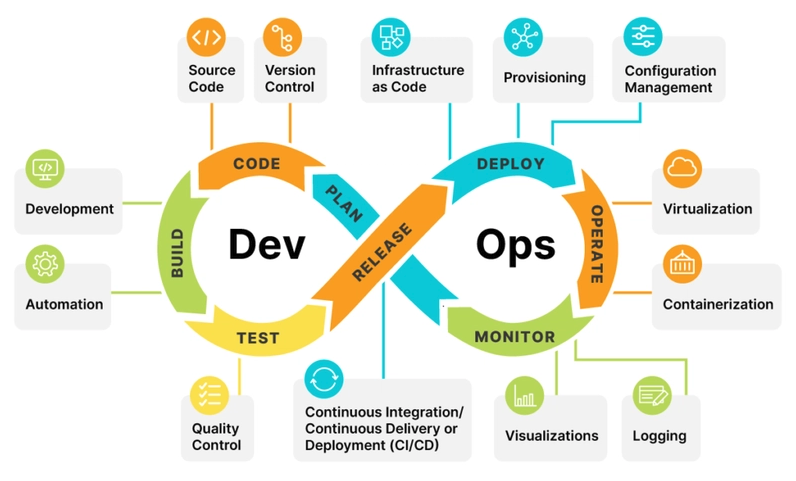
AIOps Is Not Magic-but It’s Necessary
With the growing need of more concrete and effective platforms and technologies, the new way of handling the issues is certainly by using the Artificial Intelligence in our regular operations, in simple terms AIOps. This is not a new concept and is already a rapidly growing service.
The system generates millions of data points through its three main data collection systems which include metrics and traces and logs during each hour of operation. All of that is too much for any team to watch.
Self-healing systems need engineers to function because they do not eliminate the need for their work. The system functions to perform tasks which humans lack the ability to do through physical work.
LLMs Are Quietly Becoming Part of Ops Work
There was no major announcement made when Large Language Models started operating. They simply showed up. More quickly than any human, they read logs.
The system enables users to perform fundamental incident reporting operations which they can reach through its user interface. They provide an explanation for failures without requiring engineers to search ten dashboards.
Frequently, their recommendations are “good enough” to proceed. Senior engineers, that is. They have no reason to be. The team consists of new employees who perform their analysis duties without fatigue because they repeat their work tasks continuously.
The team members would distribute their time differently after this change.
Automation Without Guardrails Is a Bad Idea
The absence of human oversight during autonomous system operation will result in physical damage which makes it difficult to believe the actual situation.
Self-healing systems that operate without governance will experience their systems fail at a quicker rate. Policy stands as the essential element which determines the most important aspects of our present society.
Governance-as-code functions as a survival mechanism rather than an administrative system. The system runs automatically through its programmed operations while it detects where humans need to step in and protects essential system components.
Self-healing systems produce destructive chaos when they run without any protective boundaries.
DevOps Isn’t Disappearing-It’s Getting More Serious
The practice of DevOps exists as a developed field because it has evolved into an advanced practice. The belief that automation technology will eliminate DevOps positions fails to recognize the core functions of DevOps work.
The workplace environment has experienced changes which brought new possibilities instead of reducing its existing duties. The system needs to restart services and pursue alerts in a shorter amount of time.
People now dedicate more time to creating systems which will operate properly during failures or prevent system failures from occurring. Engineers move from writing scripts to developing operational procedures which control their system operations.
The organization has shifted its operations from emergency response to become an active force which supports system dependability maintenance. The work demands additional work than it needs minimal work.
What Teams Should Be Doing Right Now
The teams that are succeeding with self-healing systems aren’t chasing buzzwords. They’re doing boring things well:
- Remedying observability issues
- Automating low-risk actions first
- Allowing AIOps pattern recognition prior to action
- Adding Governance Early, Not Later
- Expanding autonomy slowly
Trust, whether in systems or between teams, takes time to develop.
This Shift Isn’t Optional
The emergence of self-healing clouds is not a trend that can be ignored or postponed. It is an answer to reality.
Manually dealing with the operational issues will seem antiquated by the year 2030. The role of DevOps will still exist but will be more architectural, more strategic, and less reactive.
The cloud is learning how to take care of itself.
The question is, will DevOps professionals be leading this learning, or will they spend the next five years fighting it?
Categories: Cloud Computing, DevOps
Tags: Self-Healing Cloud, AIOps, Autonomous Operations, DevOps 2030, Cloud Automation.
The post The Quiet Rise of Self-Healing Clouds-and Why DevOps Won’t Look the Same by 2030 appeared first on Datafloq.
